Catalogue
Discover your next read
Loading books…
Catalogue
Loading books…
Catalogue
Search, filter and sort across every book on Booksellr.
Showing 1–15 of 84 books

Joseph Conrad
"Heart of Darkness" follows Marlow's harrowing journey into the Congo, where he confronts the brutal realities of colonialism and the moral decay of the enigmatic Kurtz, ultimately revealing the darkness that resides within humanity.
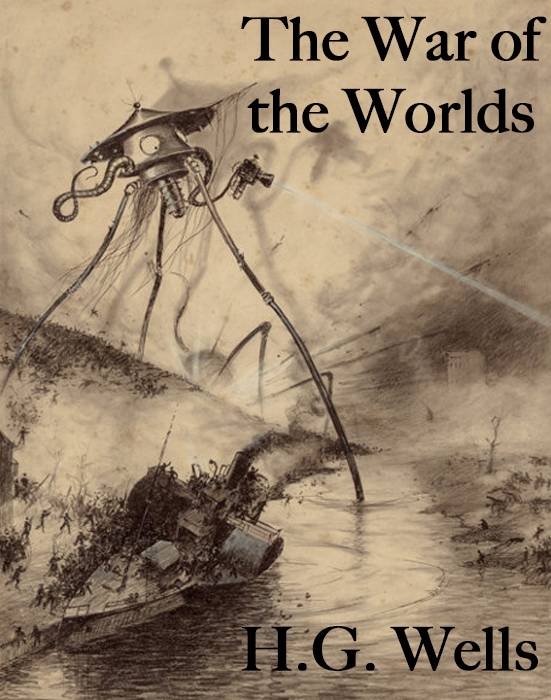
H. G. Wells
H.G. Wells' "The War of the Worlds" chronicles the harrowing tale of humanity's desperate struggle for survival against a ruthless Martian invasion, exploring themes of fear, resilience, and the fragility of civilization in the face of an overwhelming extraterrestrial threat.

Friedrich Wilhelm Nietzsche
In "Beyond Good and Evil," Nietzsche challenges conventional notions of truth and morality, advocating for a reevaluation of philosophical thought that prioritizes individuality and cultural identity over herd mentality.

John Galsworthy
In 'Justice,' John Galsworthy presents a gripping courtroom drama that examines the devastating effects of abuse and mental health struggles through the intertwined lives of Falder, a desperate clerk, and Ruth Honeywill, a woman seeking escape from her abusive marriage, ultimately questioning the nature of justice and morality.

Charles Darwin
In 'On the Origin of Species', Charles Darwin articulates his revolutionary theory of evolution through natural selection, detailing how species adapt and evolve over time due to competition, environmental factors, and individual variability.

Robert Forsyth Scott
"St. John's College, Cambridge" by Robert Forsyth Scott chronicles the college's historical evolution, architectural significance, and academic contributions from its founding in 1511 to its modern reforms, highlighting key figures and events that shaped its legacy.

United States. Office of Strategic Services
The 'Simple Sabotage Field Manual' empowers ordinary citizens to disrupt enemy operations during wartime through creative and coordinated acts of sabotage, emphasizing the strategic significance of collective action in undermining enemy resources and morale.

Charles Darwin
'More Letters of Charles Darwin - Volume 1' offers an intimate look into the life and thoughts of Charles Darwin through his correspondence, revealing the evolution of his groundbreaking theories on natural selection and species variability, intertwined with personal reflections on health and family.

P. G. Wodehouse
In 'Right Ho, Jeeves,' Bertie Wooster's attempts to navigate the tangled romantic lives of his friends lead to a series of comedic misadventures filled with misunderstandings, social expectations, and the clever machinations of his resourceful valet, Jeeves.
Harriet Martineau
In 'Society in America, Volume 1', Harriet Martineau explores the foundational principles of American governance, analyzing the moral implications of slavery, the dynamics of political power, and the urgent need for active citizenship and integrity in the pursuit of justice and equality.

William Wordsworth
In 'The Law of Copyright,' William Wordsworth passionately argues for authors' perpetual rights over their works, confronting opposition from printers and publishers while emphasizing the importance of protecting literary property and advocating for justice within the literary community.

J. M. Barrie
In 'Peter Pan,' J.M. Barrie weaves a whimsical tale of childhood adventure as Wendy Darling and her brothers are whisked away to Neverland, where they confront the allure of eternal youth, the complexities of family, and the looming threat of the vengeful Captain Hook.

In _Les caquets de l'accouchée_, the satirical narrative critiques 17th-century Parisian childbirth customs, revealing the absurdities of social status and the complexities of women's roles amidst societal expectations and injustices.

Sophocles
In 'Oedipus King of Thebes,' Oedipus's quest to save his city from a plague leads him to uncover a devastating truth about his own identity, resulting in tragic consequences that fulfill a horrific prophecy.

Aristotle
In 'The Ethics of Aristotle,' the philosopher articulates a comprehensive framework for understanding happiness as the ultimate goal of human life, emphasizing the cultivation of virtue, practical wisdom, and the importance of friendship and justice in achieving a fulfilling existence.